.svg)


Beyond the Spreadsheet: How Digital Knowledge Bases Are Changing Tailings Management
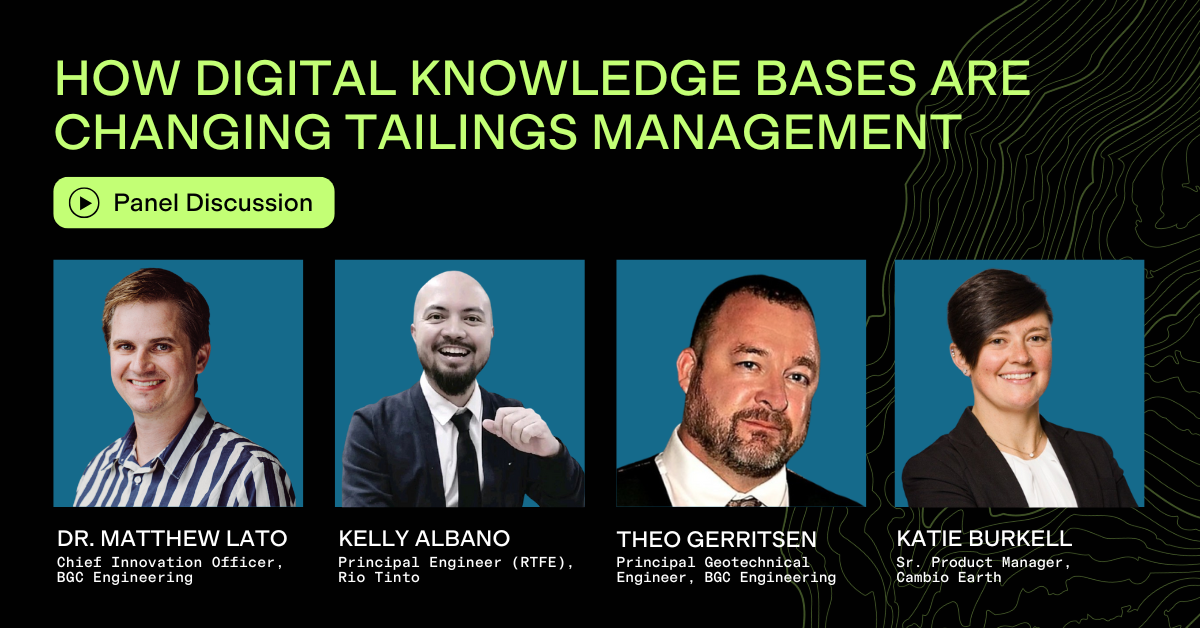
We recently hosted a panel discussion with leaders from Rio Tinto, BGC Engineering, and Cambio Earth to talk about the next chapter: the role of digital knowledge bases to make instrumentation data more meaningful, actionable, and aligned with real performance priorities.
If you missed it, watch it now or continue reading for some of the big takeaways from the discussion.
1. Tailings instrumentation only works when it’s tied to real failure modes
Instrumentation isn’t about coverage for the sake of coverage. It should be about targeted monitoring aligned with known failure mechanisms.
Kelly Albano emphasized that many sites still inherit legacy arrays—piecemeal instruments installed over decades with unclear purpose or documentation. The result: data noise, misinterpretation, and expensive re-investigations.
A better approach:
· Start with what you know about the facility—materials, construction, weak zones, controls.
· Link instruments to the failure modes they are meant to detect.
· Rationalize legacy arrays to reduce noise and improve confidence.
2. “Garbage in, garbage out”: Quality and governance still matter
One of the clearest messages from the panel: digital systems are not magic. They can’t fix poor setups, missing installation records, or incorrectly installed instruments.
Theo Gerritsen highlighted that basic governance and QA/QC still make or break tailings monitoring programs:
· Good design and thoughtful placement
· Proper installation and documentation
· Clear ownership and continuity over decades
· Routine audits to detect issues early
Without these foundations, even the most advanced platform or AI tool can't deliver meaningful insights.
3. Digital knowledge bases improve both performance monitoring and forensic analysis
Katie Burkell underscored a central theme: many engineers are drowning in data, not insight.
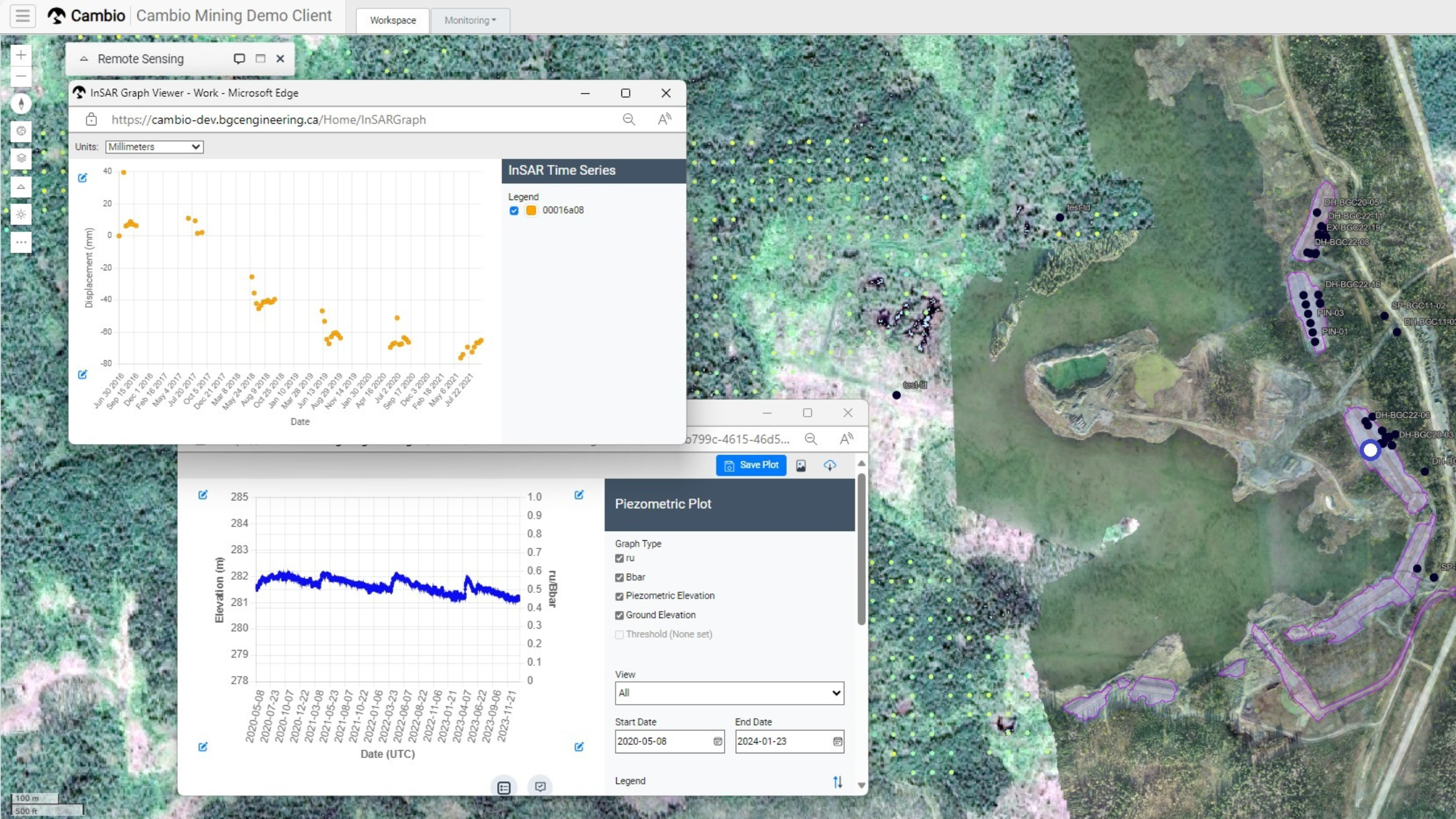
Digital knowledge bases with integrated site monitoring help by bringing context together—instrumentation trends, construction activities, photos, field observations, remote sensing, and weather data—in one geospatial environment.
This enables:
· Faster detection of anomalies
· Easier checks against external factors (e.g., precipitation vs. pore pressure changes)
· Better communication with ITRBs, EoRs, and site teams
· More efficient onboarding for new staff
· Reduced time spent on data wrangling, screenshotting, and spreadsheet stitching
That context also helps identify when a sensor is simply wrong—before it triggers false alarms or slows down decision-making.
4. Adding more instruments is not always what’s needed
A surprising takeaway: with better digital systems, sites may actually install fewer instruments, not more.
Why?
· Better targeting of where instrumentation is truly needed
· Earlier detection of faulty sensors
· Redundancy planned around real critical zones
· Confidence built from cross-checking multiple data sources
Theo summed it up: “If the system works well…we would have a big reduction in the number of instruments. We’d just have better instruments working more efficiently.”
5. Integrated site monitoring systems aren’t just for big mines
All panelists agreed: scalable digital systems bring just as much—if not more—value to small and mid-sized mines.
Smaller operations often have:
· Fewer people
· Tighter budgets
· Less time to manually process data
Digital systems help them make faster decisions with less administrative overhead—exactly where the efficiencies matter most.
6. AI will play a role in tailings management—but won’t replace engineering judgment
When asked whether AI will be integrated into tailings management systems by 2028, the panel delivered a nuanced answer.
Yes—AI will likely help with:
· Detecting subtle data deviations
· Flagging anomalies and gaps
· Streamlining routine interpretation
But no—AI will not (and should not) replace geotechnical judgment.
Instruments still need to be well-designed, well-installed, and well-maintained. Data still needs context. Engineering decisions still need people.
As Katie put it: “AI will support decisions, but it will never replace engineering judgment.”
Watch the full discussion
This panel discussion was rich, technical, and refreshingly honest. If you’re involved in tailings governance, design, construction, or operations, the full conversation is well worth your time.
.png)
.svg)

.png)