.svg)


Finding the 4%: Using Machine Learning to Prioritize Pipeline Water Crossing Risk
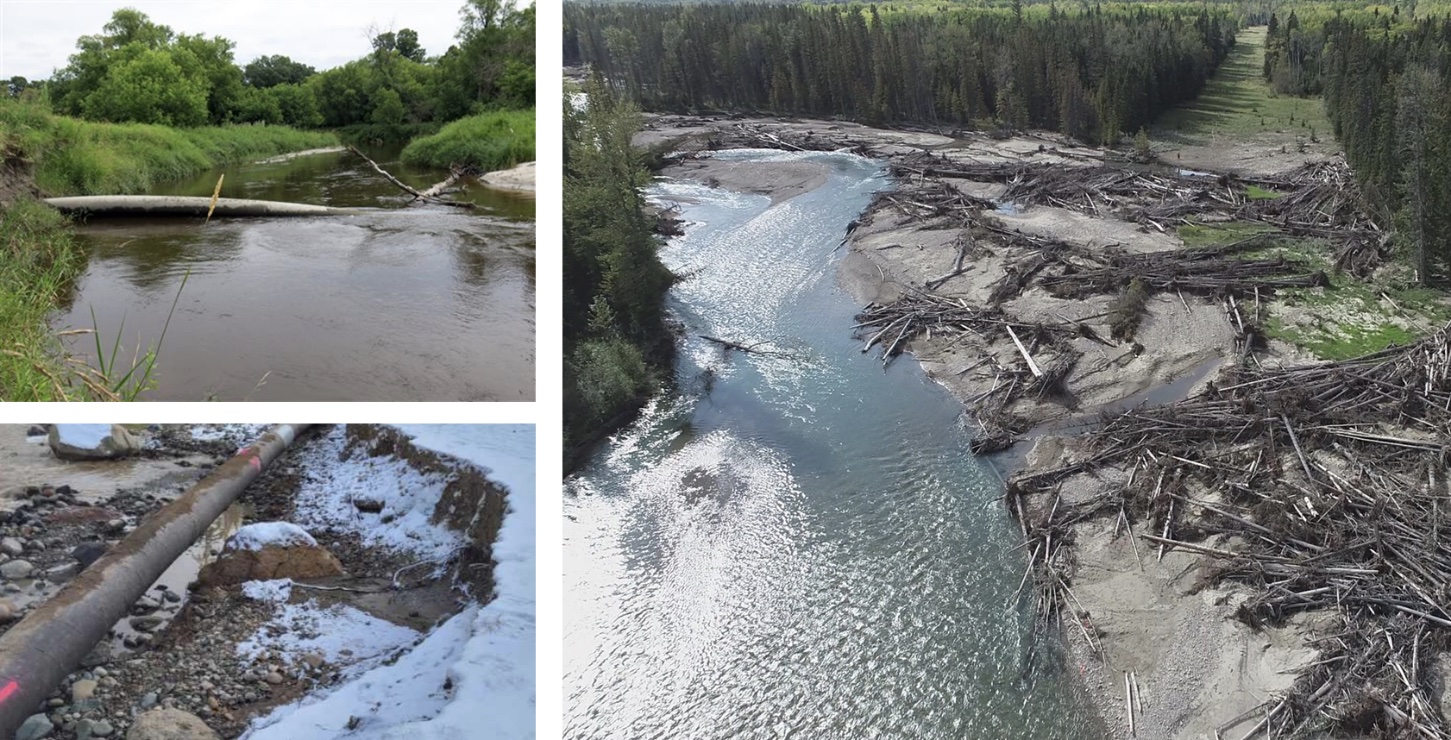
Watercourse crossings are a well-known hazard in pipeline systems. Channel migration, flooding, and scour can reduce depth of cover and expose pipelines. Traditionally, assessing this hazard requires field inspection — measuring depth of cover, evaluating channel characteristics, and estimating scour potential. The difficulty is scale.
Large pipeline systems often contain thousands of watercourse crossings, many located in remote areas. Inspecting every crossing requires significant time and resources, yet operators still need complete crossing inventories with probability-of-failure estimates to support integrity management and regulatory programs.
First introduced at the Pipeline Technology Conference (Zahradka et. al, 2025), the Cambio™ Water Crossing PoF addresses this challenge using supervised machine learning trained on decades of inspection data to prioritize crossings and estimate failure likelihood.
The Prioritization Problem
Watercourse hazard is not evenly distributed across a pipeline network. In many systems, a small fraction of crossings account for the majority of risk. Roughly 4% of sites represent more than 90% of watercourse hazard exposure. Despite this, many operators still rely on comprehensive field inspection programs to evaluate crossings.
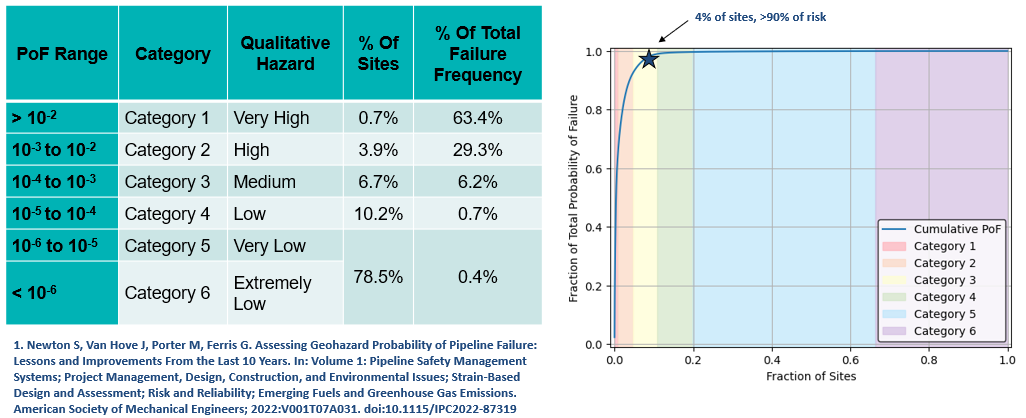
For a typical large pipeline system:
- Crossings may occur every ~3 km
- Field crews inspect roughly 10 crossings per day
- A 10,000 km pipeline system could require 300+ field days to assess fully
A scalable way to identify which crossings warrant detailed inspection can significantly improve the efficiency of integrity programs.
Learning from 33,000 Field Inspections
Cambio Water Crossing PoF was developed using a structured inspection dataset compiled from pipeline watercourse assessments across North America. The dataset includes:
- 33,000+ field inspections
- ~20,000 unique crossings
- ~3 million pipeline kilometre-years of operational context
During these inspections, hydrotechnical specialists documented and calculated parameters such as:
- Depth of cover
- Bankfull width
- Channel gradient
- Scour depth
- Hydraulic conditions
- Probability of failure
Because these inspections were collected in a consistent and structured format, they provide an excellent training dataset for machine learning models.
The resulting model learns relationships between watershed characteristics, stream properties, and pipeline attributes and the hazard conditions observed in the field.
Model Inputs
The model integrates characteristics that are widely available from geospatial datasets and pipeline records.
Pipeline characteristics
- Installation date
- Outer diameter
- Wall thickness
- Joint type
- Material grade
- Maximum operating pressure
Watercourse characteristics
- Bankfull width
- Stream order
- Channel gradient
- Flood frequency indicators
Watershed characteristics
- Catchment area
- Landcover
- Climatic variables
- Hydrologic soil groups
- Watershed topography
These inputs allow the model to estimate hydraulic and exposure conditions that would normally require field measurements.
Modelling the Hazard Chain
Rather than producing a single opaque risk score, the model estimates the physical steps that lead to failure risk.
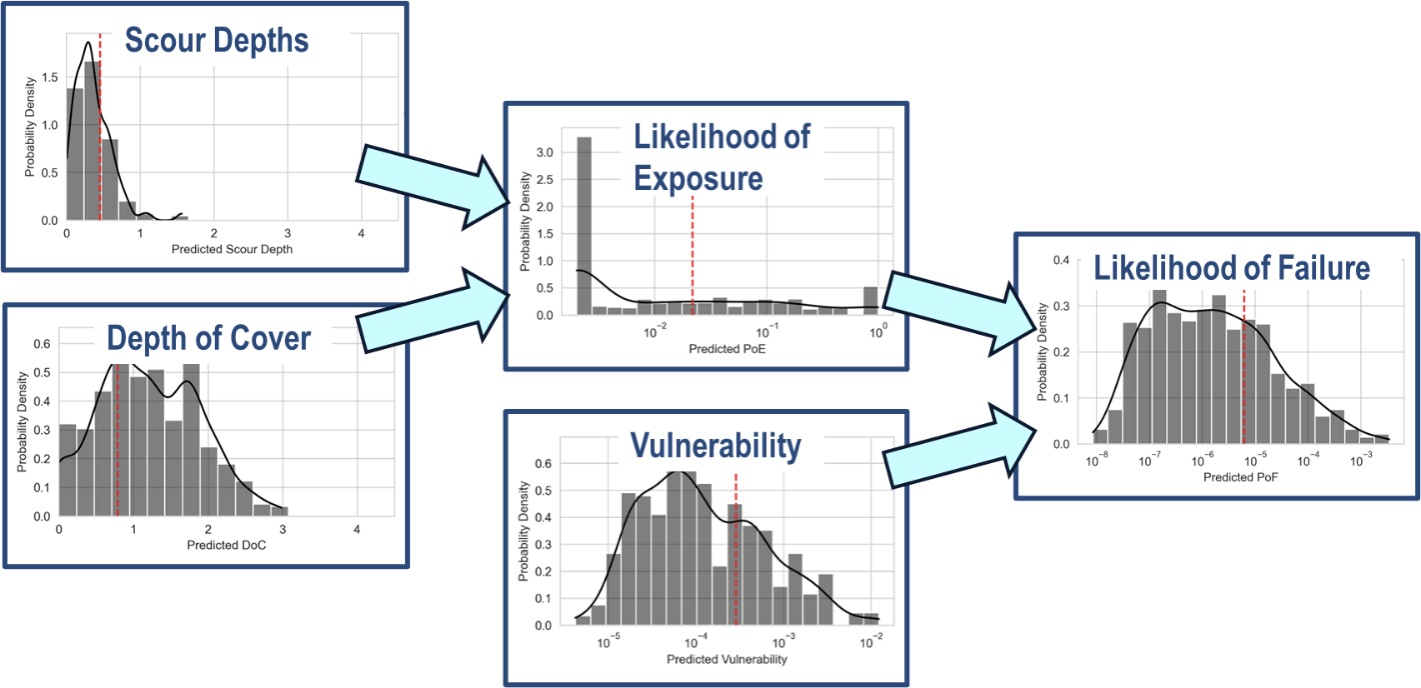
This structure keeps the model physically interpretable and aligned with hydrotechnical engineering practice. It also helps engineers understand which factors are driving predicted risk at individual crossings.
Quantifying Uncertainty
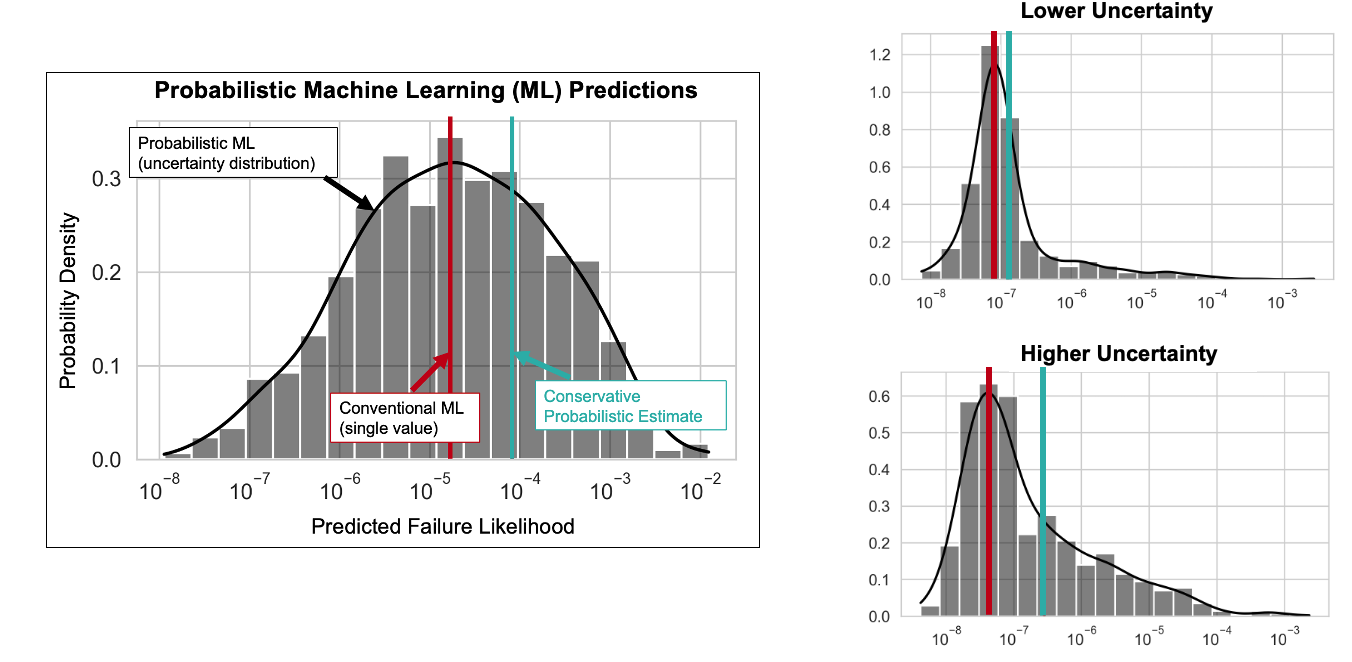
Another key feature highlighted in the REX presentation is the use of probabilistic machine learning. Instead of producing a single predicted value, the model generates distributions of possible outcomes, allowing uncertainty to be quantified directly.
This enables operators to evaluate:
- expected probability of failure
- prediction uncertainty
- conservative scenarios aligned with risk tolerance
For example, operators may use a 70th percentile estimate rather than a median prediction to maintain conservative prioritization. This provides a more transparent basis for risk-informed decision making.
Operational Benefits
Applying machine learning as a screening assessment allows operators to move quickly from incomplete crossing inventories to prioritized inspection programs. Typical outcomes include:
- Rapid hazard screening: Probability-of-failure estimates can be generated across entire crossing inventories in days rather than years.
- Inspection prioritization: Field inspections can be focused on crossings most likely to require intervention.
- Consistent risk estimates: Crossings across large geographic areas can be assessed using a consistent and defensible methodology that integrates with broader integrity management tools that are based on quantitative risk assessments.
In one example presented at REX, an operator with 1,603 uninspected crossings faced inspection costs exceeding $2 million USD. Using the machine learning approach reduced inspection costs by more than 90% while still identifying the highest-risk sites and maintaining a defensible decision making process.
A Scalable Screening Approach
Cambio Water Crossing PoF is designed as a screening-level assessment, not a replacement for engineering judgment or field inspection. Instead, it helps operators answer a critical early question: Where should we focus our field resources first?
By rapidly identifying high-priority crossings, integrity teams can:
- complete hazard inventories faster
- allocate inspection resources more effectively
- identify emerging risks earlier
Machine learning does not replace engineering expertise. But it can help ensure that engineering attention is focused where it matters most.
1. Zahradka A, Coia V, Grover P, Mitchell A, Adair T. Applying Machine Learning to Geohazard Management: efficient assessment of pipeline watercourse geohazards by learning from 3 million kilometre-years of geohazard field inspections. Published online 2025.

.jpg%20(1)%20(1).jpeg)
.svg)

.png)